ECCAS and AFD explore avenues for enhanced cooperation
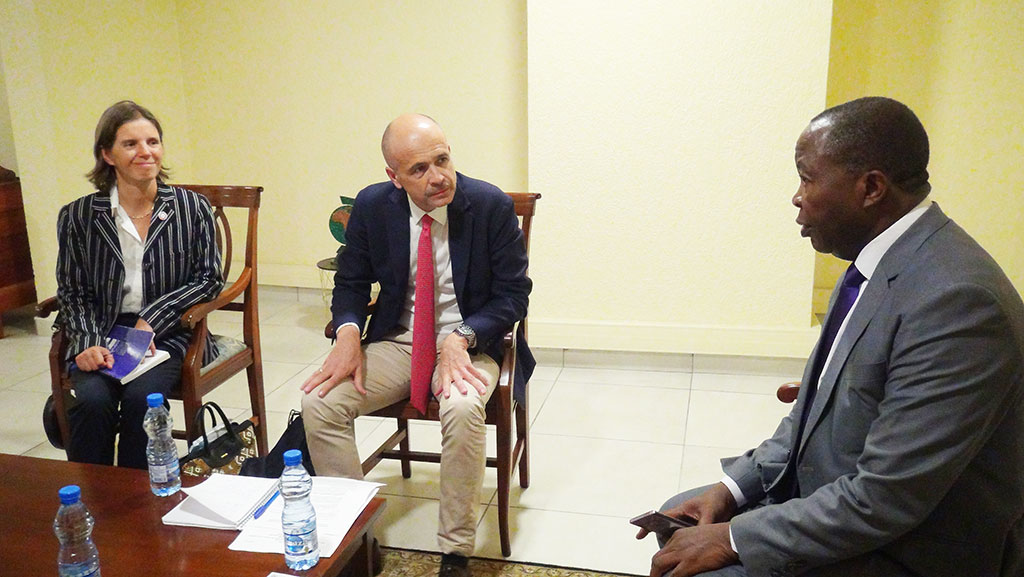
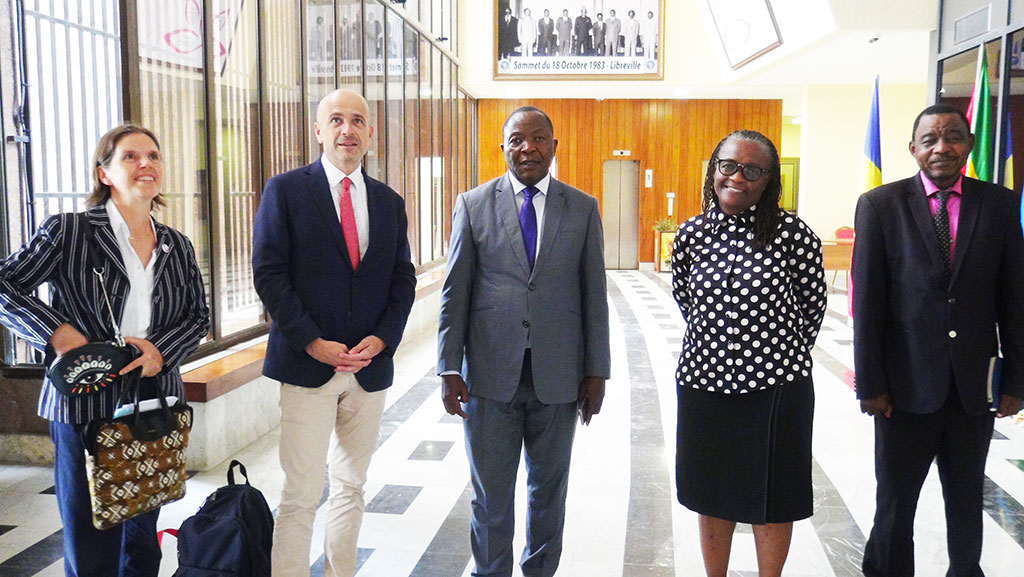
The Commissioner in charge of the Environment, Natural Resources, Agriculture and Rural Development (DERNADR), Dr Honoré TABUNA, received this Wednesday, 19 October, at the headquarters of the Economic Community of Central African States (ECCAS), a delegation from the French Development Agency (AFD) led by its Regional Director for Central Africa based in Douala, in ..
The Commissioner for the Environment, Natural Resources, Agriculture and Rural Development (DERNADR), Doctor Honoré TABUNA, received this Wednesday 19 October, at the headquarters of the Economic Community of Central African States (ECCAS), a delegation from the French Development Agency (AFD) led by its Regional Director for Central Africa based in Douala, Cameroon, Mr. François Jacquet.
The purpose of the visit was to explore the area of cooperation between AFD and ECCAS, including through the Congo Basin Forest Partnership (CBFP) and the Central African Forest Initiative (CAFI) in terms of funding opportunities for ECCAS.
The CBFP was facilitated by France in collaboration with the Gabonese Republic, following that of Germany. The intervention of AFD should be in line with the strategic plan of ECCAS for the period from 2021 to 2025, which is available in national eponymous documents.
In the course of his speech, Commissioner TABUNA provided an overview of ECCAS since the institutional reform, in particular the various structuring departments, their organizational frameworks, and in particular the one he leads, which is in charge of CBFP and CAFI.
It is an institution that restarted the 1stand September 2020 and which has set itself for ambitions and among many others, to provide ecosystem services to its people. These include:
- Supply of water and electricity,
- Food and nutrition security, etc.
The Commissioner has focused mainly on some elements of the ECCAS institutional framework that concern his area of competence. He cited the Central African Forest Commission (COMIFAC), the Central African Denses and Humids Ecosystems Conference (CEFDHAC), the Network of Civil Society Organisations for the Green Economy in Central Africa (RCECVAC) and many other networks that contribute to:
- Development of the green economy system with the establishment of the Green Climate Fund in Central Africa;
- Development of the blue economy system with the related fund,
Eco Security in Central Africa with the support of the United Nations Office against Drugs and Crime (UNODC) in the fight against poaching, deforestation, etc.
To achieve this, ECCAS needs the leadership of its member states, Champions, Goodwill Ambassadors, and a strong mobilization of human and financial resources to design and implement the Permanent Programmes in all areas of activity, including the carbon economy.
With regard to the latter, it should be noted that there is very little expertise in the subregion to support our member states in making the carbon economy a source of income for their development. States do not have experienced scientists to facilitate the proper understanding and dissemination of this concept at all levels of the population, nor do they have econometers to model it and even less experts who can charge this service and bring foreign exchange into the coffers of our States. In short, ECCAS and its member States are not yet equipped to properly master this concept and to make it a lever for the development of the region. Therefore, there is a great need for capacity-building in this area.
In general, since the inception of the CBFP in Johannesburg, South Africa in 2002, and to better ensure the governance of the Congo Basin forests, ECCAS and its partners, and in particular the CBFP, have shared roles and responsibilities.
For example, ECCAS is responsible for the overall coordination of all forest-related activities. It establishes and coordinates dialogue between all actors, all stakeholders operating in this area, including the structures responsible for mining, gas and oil.
The CBFP, for its part, will take steps to strengthen the convergence plans of the states for the conservation of forests and biodiversity and the mobilization and provision of financial resources to finance projects and programmes to achieve the related objectives.
The Delegation of AFD took note of all the statements made by Commissioner TABUNA and the commitment to take them into account in its future financing offers in the context of managing its portfolio.