 FR
FR
 EN
EN
 ES
ES
 PT
PT
The Economic Community of Central African States
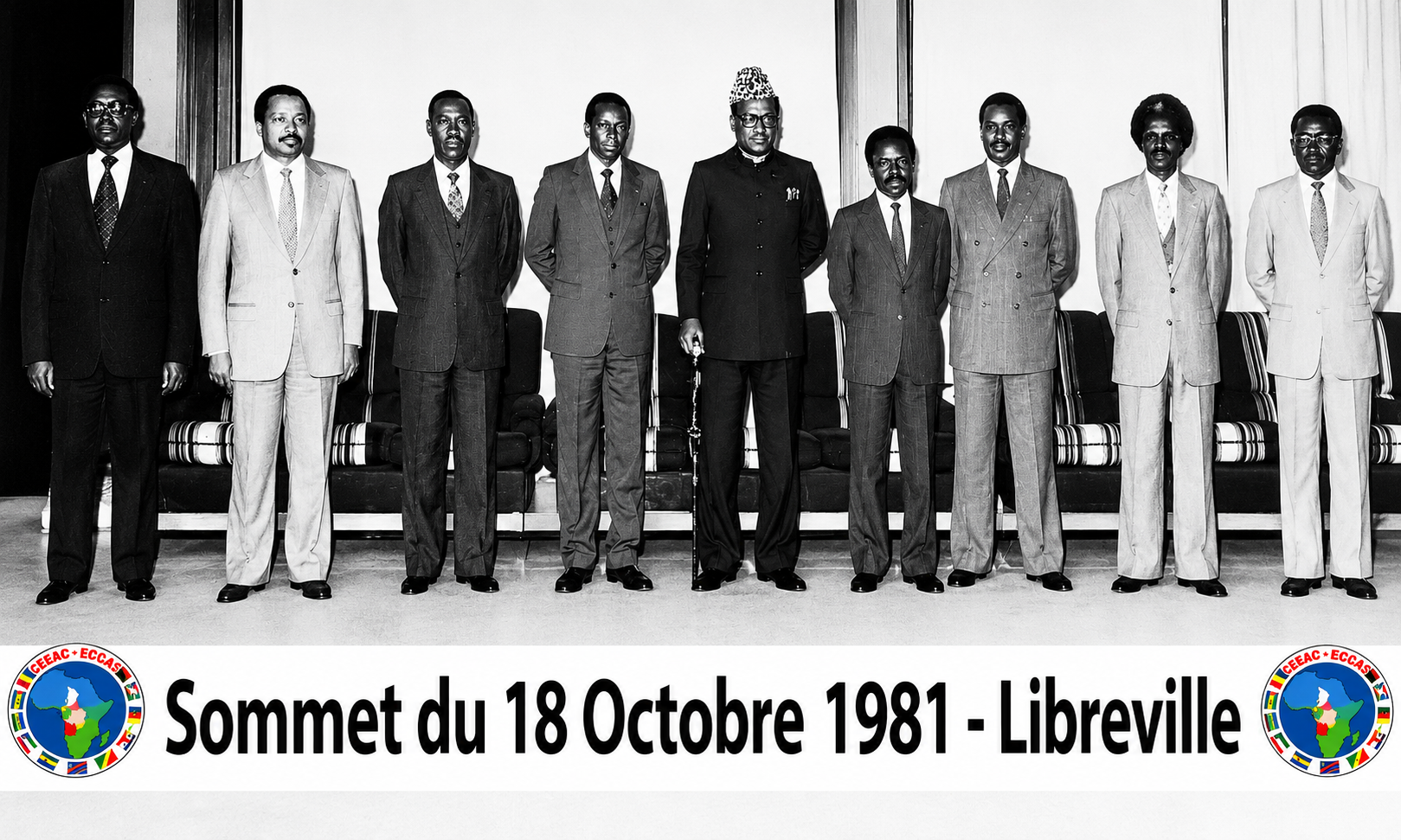
Founded on 18 October 1983 in Libreville, the ECCAS Commission works to promote regional cooperation.
The Economic Community of Central African States (ECCAS) is an international organization established by the States of the subregion to promote and strengthen cooperation and harmonious and balanced regional integration. The revised ECCAS Treaty consolidates this ambition by putting Community action in a dynamic of bringing Member States closer together and building an integrated regional area, based in particular on solidarity, cooperation and the pursuit of common interests.
ECCAS aims to promote the sustainable economic and social development of Central Africa, in particular through deepening economic integration, promoting peace and security, free movement, infrastructure development and policy coordination in the various areas of Community interest. Its action thus aims to contribute to the improvement of the living conditions of the people and to strengthen the collective capacity of the Member States to respond to the challenges of the region.
The revised Treaty also strengthened the institutional architecture and governance of the Community. This includes the Conference of Heads of State and Government, the Council of Ministers and the Commission, as well as other institutions and bodies provided for in the Treaty. The Commission is a central player in this institutional architecture and contributes, within its powers, to the implementation of Community guidelines, decisions and policies with a view to advancing the integration process in Central Africa.
The 6 pillars of ECCAS
History of ECCAS
At a summit in December, the leaders of UDEAC agree on the principle of forming a broader economic community of Central African States.
Signing in Libreville of the founding Treaty of ECCAS. The Treaty entered into force in December 1984.
Period of cessation of activities due to crises and conflicts in the sub-region.
Revival of ECCAS with a new mandate including peace and security, and the creation of COPAX.
Effective establishment of the Free Trade Area (FTA) between member states.
Adoption of the Common Agricultural Policy (PAC-ECCAS) and PRIASAN.
Adoption of the revised Treaty and transformation of the General Secretariat into a Commission.
Entry into force of the revised ECCAS Treaty.
Aims & Objectives
Our Missions
Promote cooperation and strengthen regional integration in Central Africa in all areas of political, security, economic, monetary, financial, social, cultural, scientific and technical activity.
Achieve collective self-reliance, raise the standard of living of populations and preserve peaceful relations between member states.
Our Visions
Make Central Africa an integrated, peaceful and prosperous area, where people enjoy a high standard of living in an environment of peace, security and stability.
Build a dynamic, connected and competitive regional common market, contributing to the building of the African Economic Community.
The 6 Priority Areas
Economic & Financial Integration
Create a regional common market through the free trade zone, customs union and harmonization of economic policies.
View the detailPeace, Security & Stability
Ensure peace and security through COPAX, FOMAC and conflict prevention and management mechanisms in the sub-region.
View the detailInfrastructure & Connectivity
Develop transport, energy, ICT and cross-border infrastructure to connect peoples and markets.
View the detailAgriculture & Food Security
Implement PAC-CEEAC and PRIASAN for agricultural transformation and regional food sovereignty.
View the detailEnvironment & Natural Resources
Preserve the Congo Basin, the second largest green lung on the planet, and promote sustainable development.
View the detailHuman & Social Development
Promote education, health, culture, gender and youth for inclusive and sustainable development.
View the detail