Defence and security issues at the next meeting of the Heads of State and Government on 25 July 2022
Kinshasa, Democratic Republic of the Congo, 20 July 2022– Upon the convening of the current President of the Economic Community of Central African States (ECCAS), President of the Democratic Republic of the Congo, His Excellency Félix Antoine Tshisekédi Tshilombo, Kinshasa, on 25 July 2022, hosts the XXIst Ordinary Session of the Conference of Heads of State and ..
Kinshasa, Democratic Republic of the Congo, 20 July 2022– At the invitation of the current President of the Economic Community of Central African States (ECCAS), President of the Democratic Republic of the Congo, His Excellency Félix Antoine Tshisekédi Tshilomboon 25 July 2022, XXIOrdinary meeting of the Conference of Heads of State and Government of ECCAS. Preparations for this event are proceeding well, as important are the issues to be debated.
Among the dossiers selected at this very high-level meeting, defence and security issues require topicality.
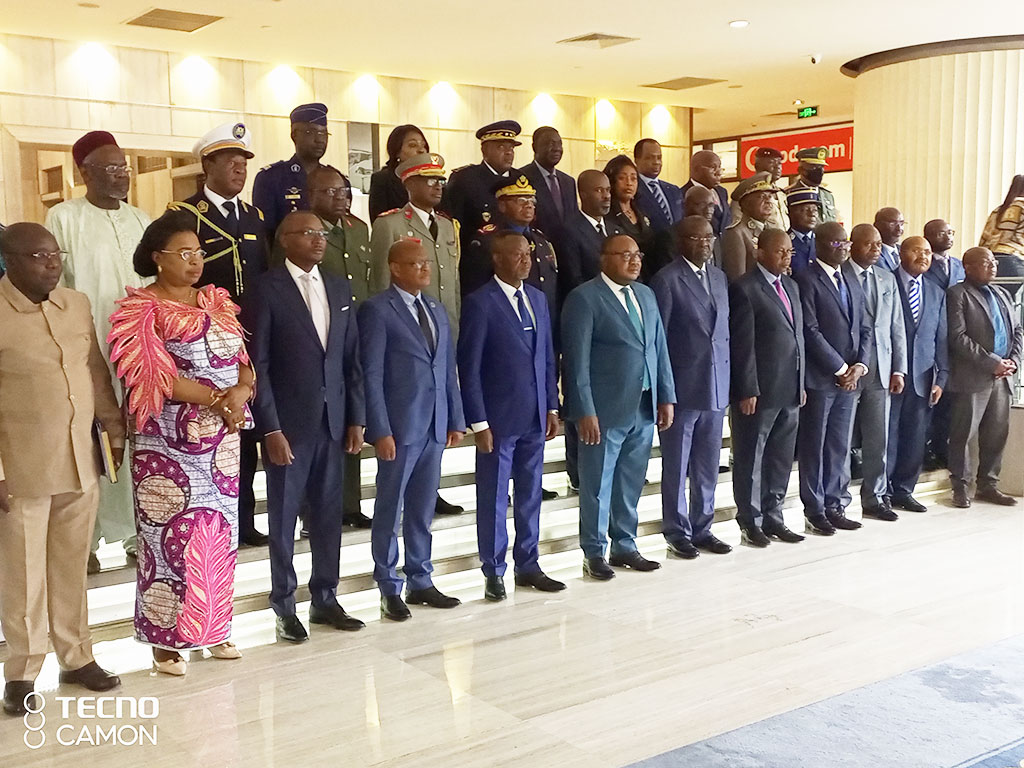
In preparation for this event, three major meetings were held with COPAX experts, Chiefs of General Staff/Chief Commanders/Directors General of Police/gendarmerie/High Officials of COPAX Ministries, Senior Security Officers and Ministers of the Specialized Technical Committee on Defence, Security and Security / Central African Peace and Security Council to decide on major security issues and to formulate proposals to Heads of State and Government.
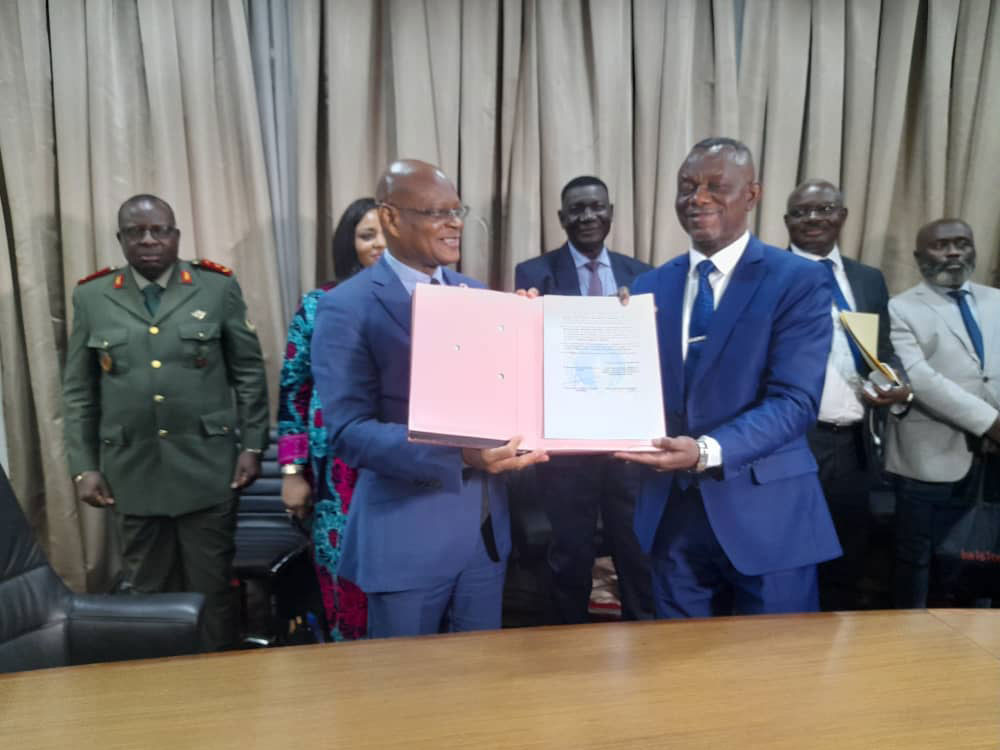
For example, the ECCAS Specialized Technical Committee on Defence, Safety and Security brought together:
- Its Peace and Security Council (COPAX) expert segment, 15-16 July 2022;
- Chiefs of General Staff/Chief Commanders/Directors-General of Police/gendarmerie/High Officials of COPAX Ministries on 18 July 2022, in a presentation (Kinshasa) and by videoconference;
- And the Interstate Committee of Experts, July 19, 2022.
The following issues were discussed and discussed during the three meetings:
- Abolition of the texts of the Multinational Force of Central Africa (FOMAC) and of the structure of the General Staff (EMR) to the revised Treaty and other revised legal texts (COPAX Protocol, Commission organic framework and Staff Regulations);
- Review of the draft organizational structure of the regional state-major complementary to the organic framework approved by the institutional reform of ECCAS;
- Consideration of the proposal for the allocation of posts by Member State on the basis of the principle of rotation of countries;
- Review of the FOMAC Capacity Generation Catalogue project by 2030
- Review of the political and security situation in Central Africa;
- Outline of the definition of the term "external aggression" and all its variants;
- Respect for electoral processes;
- Regional support for the process of demobilization, disarmament, reintegration and repatriation in the Central African Republic;
From the consideration of all these items, it appears that the overall political and security situation in Central Africa, during the period from January to July 2022, has remained stable, but the region continues to face several security challenges, including terrorism and violent extremism; Activism of armed groups and secessionist movements; inter-community conflicts; The negative impact of the Russian-Ukrainian war; accidents in the land transport sector; natural disasters and the negative impact of the health crisis caused by the VOCID-19 pandemic.

At the political level, the Member States have demonstrated their determination to meet their respective electoral deadlines in the course of 2022. This is the case with the parliamentary and local elections held on 04 and 10 July 2022 in the Republic of the Congo.
Relevant recommendations were made to the ECCAS Commission on:
- The organisation of a workshop to set up a platform to support humanitarian issues in collaboration with humanitarian agencies including the International Committee of the Red Cross;
- The awareness-raising workshop on hate speech planned by the ECCAS Commission in collaboration with ECCAS partners including the European Union (EU) and the Centre for Constructive Conflict Resolution (ACCORD) planned in Libreville in September 2022;
- The request by the Central African Republic for support to the Community, together with the Government of that Member State, to work without delay to finalize the practical modalities for supporting the region in the process of Demobilization, Disarmament, Reintegration and Repatriation being implemented by the Government, in collaboration with partners, in particular the United Nations Multidimensional Integrated Stabilization Mission in the Central African Republic (MINUSCA);
- The working methodology for the preparation of meetings of the Community, the Chiefs of General Staff (CEMG) / Commanders-in-Chief/General Directors of Police/Gendarmerie / Senior Officials of COPAX Ministries who recommend that COPAX Ministers instruct the ECCAS Commission to deal with this issue with the current Presidency and Member States at the workshop scheduled for late September – early October 2022. During the same workshop, the items relating to the FOMAC capacity catalogue, the distribution of posts within EMR (rotation and quota) will also be dealt with;
The CEMG / Commanders-in-Chief/Directors-General of Police/Gendarmerie / Senior Officials of COPAX Ministries followed a presentation made by the Commission in accordance with the instruction of the meeting of COPAX Ministers of 29 April 2022.
- The recommendation to COPAX Ministers to adopt the definition of "external aggression" and submit it to the Council of Ministers for approval by the Conference of Heads of State and Government and its annex to the ECCAS Non-aggression Pact.
In resolution 3314 (XXIX) of 14 December 1974, the General Assembly of the United Nations defines the concept of aggression and determines its forms in the following terms:
Aggression is the use of armed force by a State against the sovereignty, territorial integrity or political independence of another State, or in any other way incompatible with the Charter of the United Nations, as can be seen from this definition.
The use of armed force in violation of the Charter by a State acting first constitutes prima facie evidence of an act of aggression, although the Security Council may conclude, in accordance with the Charter, that establishing that an act of aggression has been committed would not be justified in the light of other relevant circumstances, including the fact that the acts in question or their consequences are not sufficiently serious.