 FR
FR
 EN
EN
 ES
ES
 PT
PT
News April 29, 2026
Participation of the ECCAS Commission in the technical workshop on bio-assensors of plants in West and Central Africa
Lomé, 29 April 2026 (Republic of Togo) - The representative of the ECCAS Commission, ABAKAR Mohammed, took part from 27 to 29 April 2026 in Lomé, Togo, in the technical workshop for reflection on plant bioaggressors in West and Central Africa. This meeting, organized by the ..
1 / 3
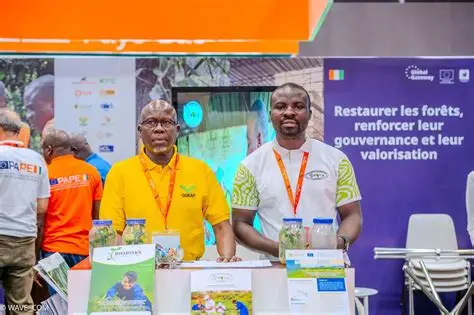
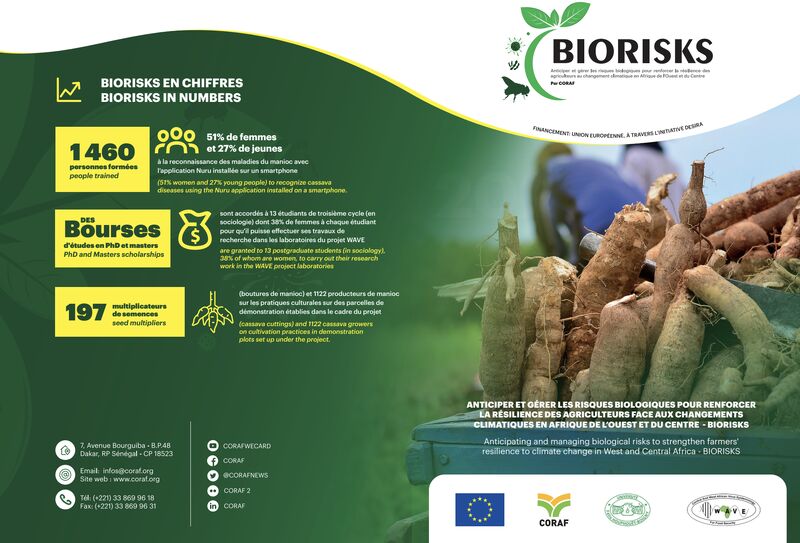
Lomé, 29 April 2026 (Republic of Togo) - The representative of the ECCAS Commission, ABAKAR Mohammed, took part from 27 to 29 April 2026 in Lomé, Togo, in the technical workshop for reflection on plant bioaggressors in West and Central Africa. This meeting, organised by CORAF with the support of its partners, is part of the BIORISKS project, funded by the European Union through the DeSIRA initiative and implemented with the WAVE Centre, the Biorisk Management Facility (BIMAF) of the International Institute of Tropical Agriculture (IITA), the Alliance Biodiversity International-CIAT and the Centre National de Spécialisation sur les Bioaménsants (CNSB) of the Togolese Institute for Agricultural Research (ITRA).
The participation of ECCAS in this workshop is of strategic importance, as biological risks, pests and plant diseases are now major threats to food and nutrition security, agricultural productivity, producer incomes, market stability, resilience of food systems and food sovereignty of member States.
The workshop provided an opportunity to deepen technical exchanges on mechanisms for prevention, anticipation, early warning and early response to bio-abuse, with a view to enhanced cooperation between West and Central Africa.
The main objectives of the workshop were to:
– To identify possible synergies between existing initiatives, programmes and projects on plant pests;
– Exchange on how to set up an early warning centre for the West and Central Africa region;
– Discuss a project concept note in the process of being developed on the basis of a consensus roadmap, and;
– Strengthen the capacity of BIORISKS project accountants on the best financial reporting practices required by financial partners.
The expected results included the identification of synergies between the structures and organisations concerned, the acceptance of actions to be taken to set up an early warning centre, the finalization of a project concept note and the training of accountants in the requirements of financial partners.
ECCAS took part in the work through an institutional, political and technical contribution on the specific issues facing Central Africa in the prevention and management of bio-abuse.
In his speech, the representative of the ECCAS Commission recalled that biological risks, pests, plant diseases and plant health threats do not know any administrative boundaries or Community boundaries, and that they require collective, coordinated, proactive and supportive responses.
ECCAS also stressed that the fight against bio-absorbents must be linked to key regional priorities, including transformation of agri-food systems, reduction of food dependence, improvement of agricultural productivity, promotion of regional value chains, climate resilience and strengthening of crisis prevention, preparedness and response mechanisms.
The representative of the Commission stressed the importance of changing current, often dispersed and fragmented approaches towards a true regional and interregional biorisk management architecture. This architecture should include national agricultural research systems, regional organizations, specialized agencies, national plant protection services, universities, monitoring platforms, producers and technical and financial partners.
One of the major achievements of the workshop is the shared recognition of the cross-border nature of bio-injury and plant diseases. For ECCAS, this approach is essential, as several Member States share production basins, trade corridors, agro-ecological zones and natural borders with ECOWAS.
This recognition paves the way for structured cooperation between ECCAS, ECOWAS, CORAF, ARAA, WAVE, BIMAF, IITA and the Alliance Biodiversity International-CIAT to build common mechanisms for anticipation, monitoring, alerting and response.
The programme document highlights the use of prospective analysis, strategic monitoring, modelling and scenario tools to better understand the determinants of introduction, diffusion and explosion of pests and transboundary diseases.
For ECCAS, this is particularly important. It would move from reactive management of plant protection crises to a preventive approach based on data, risk analysis, climate modelling, weak signals and changing scenarios. Such an approach could be integrated into future regional arrangements for food and nutrition security, climate resilience and agricultural risk management.
After discussion, several comments were made from the ECCAS perspective.
 First, the prevention and management of bio-abuse should be seen as a pillar of food and nutrition security in Central Africa, along with production, processing, storage, marketing and climate resilience. Secondly, fragmentation of initiatives limits the effectiveness of responses. It is therefore necessary to establish a coordination framework to pool tools, data, platforms, expertise and resources. Thirdly, Central Africa needs to strengthen its capacity for diagnosis, surveillance, data collection, prospective analysis, risk communication and rapid response, taking into account its agro-ecological realities and specificities. Fourthly, setting up an early warning centre should not be purely technical. It must be based on a clear institutional anchor, defined responsibilities, funding mechanisms, data sharing protocols, intervention procedures and Member States' ownership. Fifthly, producers, women, young people, agricultural professional organizations, extension services, local communities and all other stakeholders need to be integrated into surveillance and alerting mechanisms, as they are often the first witnesses of infestations and outbreaks of diseases.